
A bank locker is commonly used to keep jewellery, important documents, property papers and other valuables in a secure location. However, renting a locker also comes with annual charges, documentation requirements and specific rules regarding access, nomination and liability.
One of the most important questions customers have is: What happens if the contents of a bank locker are stolen, lost or damaged?
The Reserve Bank of India (RBI) has issued guidelines covering bank locker operations and the liability of banks in certain situations. However, bank locker compensation is not automatically equal to the actual value of all items kept inside the locker.
This guide explains bank locker charges, rules and compensation for lost items in India.
What Is a Bank Locker?
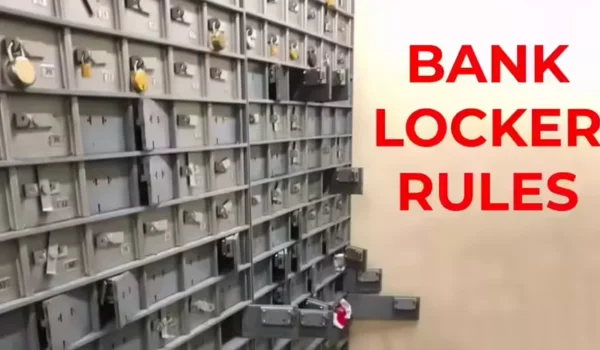
A bank locker is a secure storage facility provided by a bank to its customers.
Customers can use lockers to store valuables such as:
- Jewellery
- Property documents
- Important certificates
- Wills and other papers
- Family documents
- Other permitted valuables
The bank provides the locker facility, but the customer is responsible for the contents placed inside it.
How Much Does a Bank Locker Cost?
There is no single fixed bank locker charge applicable to every bank in India.
Locker rent can vary depending on:
- Bank
- Locker size
- Branch location
- Metropolitan or non-metropolitan location
- Type of locker
- Applicable taxes
- Other bank charges
Banks generally publish their locker charges through their official websites or branch schedules.
A larger locker in a major city can cost significantly more than a smaller locker at another location.
Therefore, before taking a locker, check the bank’s current tariff rather than relying on an old charge quoted online.
What Are the Different Locker Sizes?
Banks commonly offer different locker sizes, such as:
- Small
- Medium
- Large
- Extra-large
The exact dimensions and availability depend on the branch.
A smaller locker may be sufficient for documents and small valuables, while larger lockers are designed for customers who need more storage space.
Can a Bank Force You to Open a Fixed Deposit for a Locker?
RBI rules place restrictions on linking locker allotment with deposits beyond what is specifically permitted.
Banks may obtain a term deposit at the time of allotment that covers up to three years’ rent and charges for breaking open the locker in case of an eventuality, subject to the applicable RBI framework.
This does not mean that every existing locker customer must create such a deposit.
Bank Locker Agreement
When a locker is allotted, the bank enters into a locker agreement with the customer.
The bank should provide the customer with a copy of the agreement. The agreement contains important terms relating to:
- Locker operation
- Rent
- Customer obligations
- Access
- Nomination
- Surrender
- Breaking open the locker
- Liability and other applicable conditions
Customers should read the agreement carefully rather than signing it without checking the terms.
Who Can Operate a Bank Locker?
A locker can be held by an individual or jointly, subject to the bank’s applicable rules.
For joint lockers, customers can select an operating mandate such as:
- Jointly operated
- Either or survivor
- Former or survivor
- Other permitted arrangements
The exact options depend on the bank and applicable rules.
What Happens If the Locker Holder Dies?
If the locker holder dies, the nominee or surviving locker holder may be able to access the locker subject to the applicable procedure.
Banks have procedures for allowing access to locker contents after the death of a locker hirer. In relevant cases, the bank may prepare an inventory before the contents are released or removed.
Customers should therefore consider registering a nominee for their locker.
What Happens If You Forget to Operate the Locker?
An unused locker does not necessarily get cancelled immediately.
RBI’s framework requires banks to monitor lockers that have remained unoperated for specified periods and to contact the locker hirer. For certain risk categories, the bank may take action after the prescribed period if the customer does not respond or operate the locker, subject to the required notices and procedures.
This means customers should not assume that continuing to pay rent alone eliminates every issue associated with a long-unoperated locker.
What Happens If Bank Locker Items Are Stolen?
This is one of the most important aspects of bank locker rules.
Banks are expected to exercise due care and take necessary precautions for the protection of lockers and the locker facility.
However, the bank does not automatically become liable for the full value of every item stored inside the locker.
Under the RBI framework, in cases of theft, burglary, fire or similar incidents attributable to specified bank-related failures, the bank’s liability is subject to the prescribed compensation framework.
How Much Compensation Can You Get for Lost Locker Items?
Under RBI’s revised safe-deposit-locker framework, where the loss of locker contents is attributable to a bank-related event such as fire, theft, burglary, robbery or building collapse attributable to deficiencies on the bank’s part, the bank’s liability is generally limited to 100 times the annual locker rent.
Example
Suppose:
- Annual locker rent = ₹5,000
- 100 times annual rent = ₹5,00,000
If the applicable RBI conditions for bank liability are satisfied, the compensation framework could therefore result in liability up to ₹5 lakh.
This does not mean that every locker loss automatically results in a ₹5 lakh payment.
The circumstances of the incident, the bank’s responsibility and the applicable rules must be considered.
Does the Bank Know What Is Inside Your Locker?
Normally, the bank does not maintain a detailed inventory of the contents of your locker.
This is important because the bank generally cannot simply verify a customer’s claim that jewellery worth a particular amount was stored inside.
Customers should therefore maintain their own records of valuable items, such as:
- Jewellery invoices
- Purchase receipts
- Photographs
- Valuation reports
- Insurance documents
Such records may be useful if a dispute or insurance claim arises.
Can You Keep Cash in a Bank Locker?
Customers should carefully check the bank’s locker agreement and applicable law before storing anything in a locker.
A bank locker should not be treated as a general-purpose cash-storage facility. Certain items may be prohibited under the locker agreement or applicable rules.
Customers should not assume that every type of asset can safely or legally be stored in a locker.
Are Bank Locker Contents Insured?
A bank locker should not automatically be considered equivalent to an insurance policy.
The bank’s liability is governed by the applicable locker agreement and regulatory framework.
If you are storing high-value jewellery or other expensive items, consider whether separate insurance coverage is appropriate for your circumstances.
What If the Bank Locker Key Is Lost?
If you lose your locker key, inform the bank immediately.
The bank may follow a prescribed process involving:
- Verification of the locker hirer
- Locker opening through an authorised process
- Replacement of the lock
- New key arrangements
- Applicable charges
Do not attempt to break open the locker yourself.
What Happens If Locker Rent Is Not Paid?
Locker rent is normally payable according to the bank’s applicable schedule.
If rent remains unpaid, the bank can take action under its locker agreement and applicable RBI rules.
Depending on the circumstances and prescribed procedure, the bank may eventually break open the locker after providing the required notices.
Customers should therefore keep sufficient funds available and ensure that annual locker rent is paid on time.
Important Bank Locker Rules to Remember
Before taking a locker, remember these points:
- Check the annual rent and applicable taxes.
- Read the locker agreement carefully.
- Keep your contact details updated with the bank.
- Register a nominee where appropriate.
- Pay locker rent on time.
- Keep records of valuable items stored inside.
- Do not store prohibited items.
- Report a lost locker key immediately.
- Inform the bank about changes in your address or contact details.
- Consider separate insurance for high-value valuables.
What Should You Do If Your Locker Contents Are Missing?
If you discover that items are missing, contact the bank immediately.
You should:
- Inform the branch in writing.
- Request details of the incident and the bank’s investigation process.
- Preserve receipts, photographs and valuation documents for the missing items.
- File a police complaint where theft or burglary is suspected.
- Ask the bank about its liability and compensation process.
- If the complaint is not resolved satisfactorily, use the bank’s grievance-redressal process and consider the applicable RBI complaint mechanism.
Do not dispose of or alter any evidence related to the incident.
Final Takeaway
Bank lockers provide an additional layer of security for valuables and important documents, but they are not risk-free storage facilities.
Locker rent varies according to the bank, locker size and branch. Customers should understand the agreement, pay rent on time and keep appropriate records of valuable items.
Most importantly, if locker contents are lost because of circumstances for which the bank is liable under the applicable RBI framework, compensation is generally subject to a ceiling of 100 times the annual locker rent, rather than automatically covering the complete value of the contents.
Because locker charges and individual bank procedures can change, customers should always check the latest tariff and locker agreement with their bank before relying on specific charges or procedures.
